| Format | PDF, ePub |
| Category | Self-Development |
| Type | eBook |
About This Book
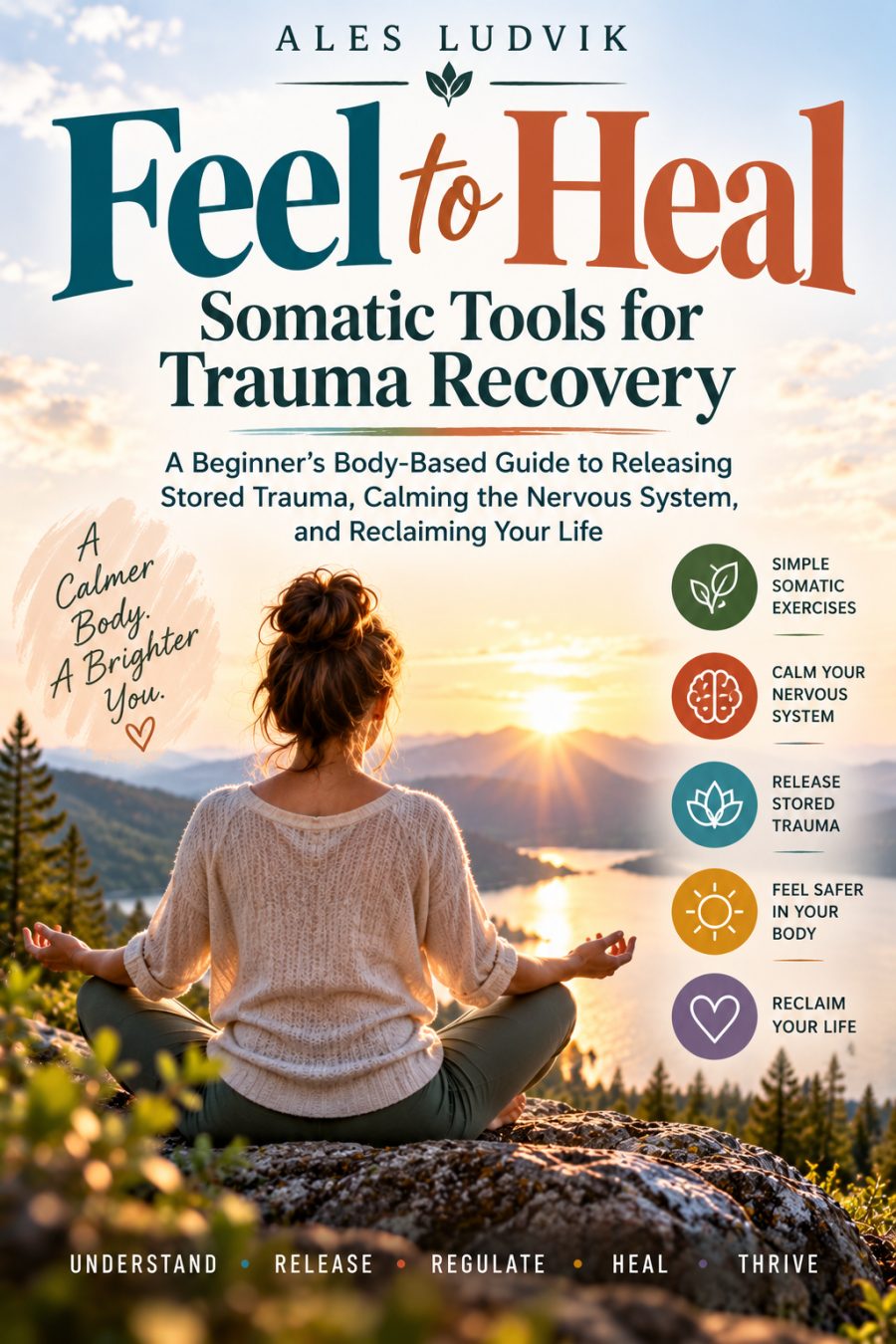
What if your body has been holding the key to your healing all along? If talk therapy has left you feeling understood but unchanged, you're not broken — you're just missing the body. Feel to Heal is your compassionate, jargon-free guide to somatic healing for trauma, designed for real people doing real healing at home — no therapist required. Inside this beginner-friendly guide to body-based trauma recovery, you'll discover: Simple somatic exercises for beginners you can do in minutes, anywhere, anytime How to practice nervous system regulation to finally feel safe in your own body Plain-language polyvagal theory for beginners — what it means and why it matters for your healing Proven trauma release techniques to gently discharge stored stress and tension A step-by-step framework for somatic therapy at home without overwhelm or retraumatization How to recognize trauma responses in your body and respond with compassion instead of fear Daily practices to reclaim your energy, relationships, and sense of self Healing doesn't have to be complicated. Your body already knows the way. Scroll up and grab your copy today — your nervous system is ready to exhale.
Table of Contents
- 1 Introduction 4
- 2 Chapter 1: What Is Somatic Healing and Why Your Body Holds the Score 5
- 3 Chapter 2: Understanding Your Nervous System: Fight, Flight, Freeze, and Fawn 11
- 4 Chapter 3: Grounding Techniques: Anchoring Yourself in the Present Moment 17
- 5 Chapter 4: Breathwork and Vagal Toning for Trauma Release 23
- 6 Chapter 5: Movement-Based Release: Shaking, Stretching, and Pendulation 29
- 7 Chapter 6: Body Scanning and Tracking Sensations Safely 35
- 8 Chapter 7: Building a Daily Somatic Practice and Tracking Your Progress 41
- 9 Conclusion 47
📖 Sample Chapter
Let's be honest: you've tried talking about it. You've sat in more than one therapist's office, unpacked your childhood like a very heavy suitcase, maybe even cried on a couch that had clearly seen better days. And yet, here you are — still feeling like something is stuck. Still waking up at 3 a.m. with your heart doing its best impression of a panicked hummingbird. Still flinching at certain sounds, shutting down in certain conversations, or wondering why your body seems to have its own opinions about situations your brain has already declared "totally fine."
Here's the thing nobody told you in those therapy sessions: trauma doesn't just live in your memories. It lives in your muscles, your breath, your posture, your gut. It lives in the way your shoulders creep up toward your ears when your phone rings, or how your jaw tightens when someone raises their voice in the next room. Your body has been holding your story long after your mind tried to file it away and move on.
This book is for you — the person in their 30s, 40s, or 50s who has done the work, read the books, maybe even made progress, but still feels like something fundamental hasn't shifted. You're not broken, and you're not beyond help. You just haven't had the right tools yet.
About the Author
Ales Ludvik
Author and publisher of practical guides, helpful ideas, and engaging challenges. Discover books designed to help you learn new skills, solve everyday problems, and explore new interests.
Ready to get started?
Instant download. All future updates included.
You Might Also Like
 New
Quietly Powerful: Confidence for Introverts
How Introverts Can Build Real Self-Confidence Without Faking Extroversion
 New
Notion for Students
How to Build a Simple Study System in Notion to Boost Grades and Kill Overwhelm
 New
5-Minute Zen Parent
Mindfulness for Busy Families: Quick Stress-Relief Techniques, Present-Moment Parenting, and Self-Care Strategies for Overwhelmed Moms and Dads